
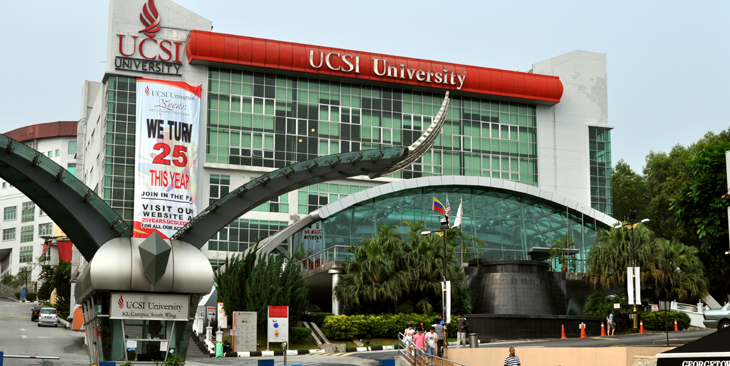
Doctor of Philosophy in Music

Highlights about course

Program Level

PhD

Duration

3 Years

Tuition Fees

RM 90,900

Intake

January, May, September

Overview

The Doctor of Philosophy in Music programme is designed for extensive, self-directed research supported by a team of supervisors within the discipline of music. The programme aims to facilitate original contributions to knowledge and society through the submission of a written thesis.

About the Programme


Mode of instructions

The programme is conducted entirely in English. It is essential that all candidates are able to speak, read, and write fluently in English.

Area of Research

PhD candidates can undertake supervised research at the Institute of Music in a wide variety of areas of music including but not limited to:

  • Composition
  • Music Education
  • Musicology
  • Popular Music


Entry Requirements


Candidates may be admitted into the programme by meeting all the academic, language, music or audition, and proposal requirements below. Additional documentations such as prior experiences in the field and recommendation letters are required.

Academic Requirements

Candidates must meet either of the following requirements:

  1. A Master’s Degree accepted by the Higher Education Provider (HEPs) Senate of the institution; or
  2. Other qualifications equivalent to a Master’s Degree, as accepted by the HEP’s Senate of the institution.

Notes for PhD by research:

  1. There shall be no direct entry from the bachelor’s degree level to the doctoral degree level.
  2. However, candidates with bachelor’s degree qualifications, registered for master’s degree programmes may apply to convert their candidacy to doctoral degree programmes
  3. Application of conversion must be done within one year after the candidate registers for master’s degree programmes.
  4. Application approval is subject to:
    1. Having shown competency and capability in conducting research at the doctoral degree level;
    2. Rigorous internal assessment by the HEP and;
    3. Approval by the HEP Senate

Research Proposal Requirements

Research proposals should be 1200-1500 words in length (excluding title and references) and include the following sections:

  • Title
  • Introduction
  • Background and Rationale
  • Review of Literature
  • Research Question(s)
  • Research Methods
  • Timetable
  • References

Please complete your proposal using this template and submit it along with your application.

English Language Requirements

For Local students
Linguaskill

154

IELTS

Band 5.0

Cambridge English Qualification and Test

154

TOEFL

42

Pearson Test of English

47

* If your native language or the prior degree studies is not in English, proof of English language proficiency is required when submitting your application. If English language is the medium of instruction from previous institution, supporting document is required.
For International Students
Cambridge English Qualifications and Tests
(B1 Preliminary, B2 First, C1 Advanced C2 Proficiency, Linguaskill Online)

154

Cambridge English Qualifications and Tests
(OET)(Conventional/Online)

200

IELTS

Band 5.0

TOEFL IBT

40

TOEFL ESSENTIALS (ONLINE)

7.5

PTE Academic / Academic (online)

47

MUET

Band 3.5

Interview

All applicants will go through an initial screening and only shortlisted applicants will be invited for an interview.

Flow Chart
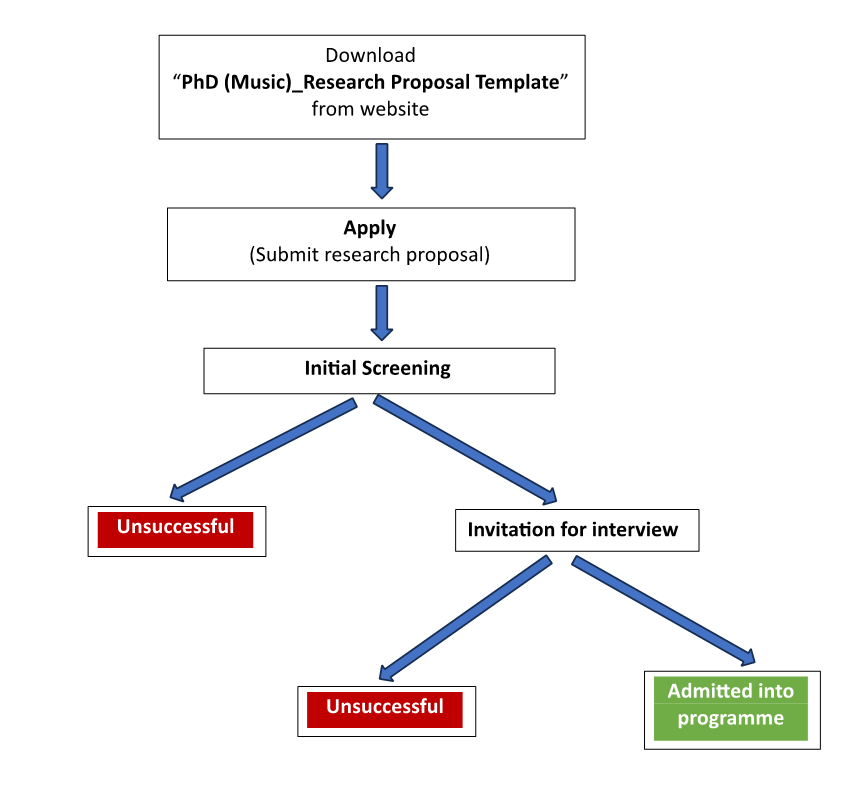
phD Music-Flow Chart


Courses Offered


Course
  • Music Research Methodology*
*It is compulsory for students to be in UCSI University campus for the first semester of the programme to undertake the research methodology course.
Graduation requirements
  • A thesis that can take different forms such as:
    • 80,000-word thesis
    • Composition portfolio and a 40,000-word thesis
  • Successful defence of thesis in a viva voce.


Programme Learning Outcomes


PLO1: Able to demonstrate significant current knowledge in relation to all aspects in music
PLO2: Able to employ self-directed study in relation to music theory and practices
PLO3: Able to critically evaluate personal practices through reflection and self-organisation
PLO4: Able to perform an independent practice as a researcher through critical engagement with theories and concepts
PLO5: Able to communicate intellectually in the areas of music while applying appropriate investigation practices as researcher
PLO6: Able to demonstrate digital literacy through analytical practices within all aspects of research
PLO7: Able to perform scientific measurement accurately and efficiently within all aspects of research
PLO8: Able to demonstrate effective organisational skills employing critical judgement through research
PLO9: Able to demonstrate professional attitude to complete research projects independently and collaboratively
PLO10: Able to demonstrate an understanding of intellectual property and value through research projects
PLO11: Able to demonstrate a professional attitude to all aspects of work to engage in ongoing personal and professional development

About University

UCSI University

Malaysia

Best countries for overseas education

Explore the best countries for overseas education and get the latest updates and insights on studying abroad. From top universities to the admission process and beyond, we’ve curated a comprehensive guide to help you navigate the exciting realm of international education.

Our students love us

Here’s What our students say about us .

Creative Consultancy Blogs

Dive in to stay updated on the latest international education trends and job opportunities

FAQs

What is overseas education?

Overseas education is leaving your home country and going abroad to pursue further education. Through overseas education, you can avail of long-term degree courses as well as short-term certificate courses to learn a language or upskill yourself.


If you are aiming to study abroad, identify your career goals, look for relevant courses and universities abroad, know the tuition fees and other expenditures, prepare well for the entrance exams, apply to shortlisted universities, accept the offer letter from the desired university, apply for a student visa and get ready to jet off! 

The best way to study abroad for free is to avail of full-funded scholarships or university grants. The fully-funded scholarships are typically awarded to students who excel in academics or extracurricular activities and cover their tuition fees, travel expenses, accommodation, and other living expenses.  

To get an education loan for studying abroad, you need to have the admission offer letter from the university and fulfill the eligibility criteria for securing the loan. In order to get an education loan at the best rate of interest, seek guidance from a reputed study-abroad consultant. 

Choose to study abroad to leverage better learning opportunities, see the world, meet new people, boost your resume, develop a broader perspective, become culturally competent, and avail yourself of lucrative job opportunities globally. 

Choose to study abroad to leverage better learning opportunities, see the world, meet new people, boost your resume, develop a broader perspective, become culturally competent, and avail yourself of lucrative job opportunities globally. 

The best way to go abroad for studies is to get in touch with reputed study-abroad consultants. They can help you explore courses aligned with your academic interests, guide you in preparing for entrance exams, help you with university and student visa applications, and even provide post-arrival assistance.

Interested in studying abroad?

Share your details & our experts will call to discuss your goals

Contact Form