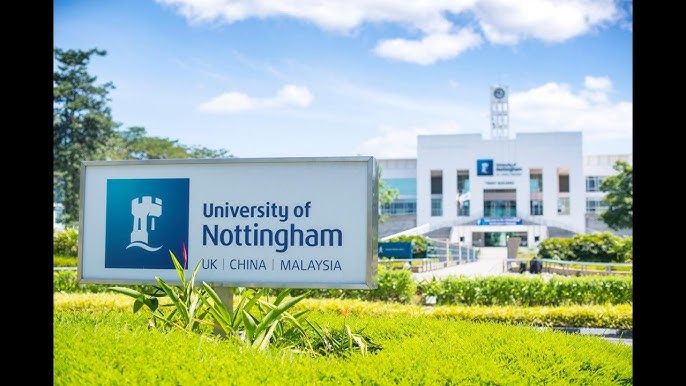

Course overview
The Bachelor of Arts with Honours in English Language and Literature at the University of Nottingham Malaysia (UNM) is an immersive programme combining the study of English language and literature in a global context. Over three years, students will explore diverse literary traditions, linguistic theories, and cultural narratives, equipping them with critical, analytical, and communicative skills highly valued in global industries.
This programme features a dynamic curriculum, including modules such as Studying Literature, Introduction to Linguistics, and Modern and Contemporary Literature. Students will delve into key topics like sociolinguistics, Malaysian literature in English, and Shakespearean drama, fostering a deep understanding of English as both a world language and a literary tradition.
With an emphasis on independent research, critical analysis, and professional communication, graduates will be well-prepared for careers in education, publishing, media, and more.
Why choose this course?
- Comprehensive Curriculum: Gain a deep understanding of English literature, linguistic structures, and cultural contexts.
- Global Literary Perspective: Explore English as a world language and literature, from sociolinguistics and Malaysian English to classical and contemporary global literary traditions.
- Versatile Skills: Develop critical thinking, analytical, and communication skills highly valued in careers like publishing, teaching, and media.
- Research Excellence: Conduct independent research through a dissertation supported by access to extensive scholarly resources.
- Diverse Literature Modules: Engage in unique topics like Shakespearean drama, modern British fiction, and world literatures to broaden your academic and cultural horizons.
- Career Readiness: Benefit from expert teaching and modules tailored to prepare you for dynamic roles in academia, creative industries, and beyond.
Modules
Year 1
Core Modules
This module offers an introduction to key issues and skills in the discipline for those making the transition to studying English at the university level in the School of English at UNM. Whereas the other modules necessarily concentrate your attention within closely defined disciplinary boundaries (with a focus that is essential to learning specific skills and acquiring specialist knowledge), this module emphasizes points of intersection between the diverse disciplines contained within the study of English. Taught in small groups, students are encouraged to explore critically and reflectively what it means to be a student of English, and are supported in developing a toolkit of study, writing, critical thinking, theory, research and communication skills which can be transferred to other modules.
This introductory module allows students to gain a broad and basic understanding of linguistics as an academic discipline. It is designed to equip students for further studies in the field of linguistics as a whole, and to develop individual specialisms in the future. Ideally, students should be well prepared to become more specialised in any of the areas covered, and take initial interests further. At the end of this module, students should be able to define the discipline, and the main pre-occupations of its sub-fields. Students will be expected to have developed an understanding of linguistic contrasts, from the phonological to the pragmatic level, and of the types of analyses open to students of those fields. This module introduces students to the core areas of linguistics, discourse, language acquisition, and pragmatics, focusing on several broad areas pertaining to linguistics and its methodological issues in phonetics, phonology, syntax, semantics, and pragmatics.
This module introduces students to some of the core skills for literary studies, including skills in reading, writing, researching and presentation. The module addresses topics including close reading, constructing an argument, and handling critical material, as well as introducing students to key critical questions about literary genres, production and reception. These elements are linked to readings of specific literary texts, focused on poetry and prose selected from the 20th and 21st century literature.
This module examines the influence of English as an international language. It provides students with an overview of the historical, literary, and social development of English including its spread as a global language through the processes of colonisation and globalisation. It also considers how English continues to evolve in the 20th and 21st centuries as an international lingua franca and focuses on its prominent role in global communications and as a resource for the shaping of identities and knowledge across the world. This module draws from a range of analytical approaches including historical linguistics, stylistics, sociolinguistics, multimodality, and globalisation theories.
This is a full-year module that introduces students to a range of core texts in the literary canon from the medieval to 21st century. It aims to provide students with a background to the history of English literature and drama, and provide a broad overview of the key developments in terms of genre, subject matter, style and reception. Students will explore a range of texts including Beowulf and Dream of the Rood, and works from authors including Chaucer, Shakespeare, Wycherley, Henry Fielding, Laurence Sterne, Wordsworth, Jane Austen, Dickens, Wilde, and Virginia Woolf to twenty-first century novel and poetry. The authors will be situated within their socio-historic context, and we will consider the relationship between culture, history and literature.
Year 2
Core Modules
This module explores the relationship between discourse and society. It considers the vital role that discourse plays in various communicative domains including healthcare, business, politics, law, the media, advertising and education. You will be introduced to frameworks for examining various types of discourse and communication strategies, including multi-modal approaches that examine the visual aspects of texts, as well as a range of contemporary approaches to discourse analysis. The domains of law, politics, healthcare, advertising, the media, business and education offer a rich resource for discourse-based studies of society and enable you to discover the uses of communicative strategies in specific social settings. For example, you will have the opportunity to analyse a range of socially-situated texts, including political speeches, police interrogations, classroom meetings, business and medical communication.
This module provides students with knowledge of the interplay between language and gender in a wide range of linguistic contexts. Students will engage with a range of analytical approaches to language, including conversation analysis, critical discourse analysis, and interactional sociolinguistics. Students will respond to and critically engage with contemporary real-world problems associated with gender and sexuality through the consideration of discourse-based texts. Topics will include gender and sexual identity construction in a range of interactive contexts, as well as sexist, misogynistic, homophobic and heteronormative representations in texts. Students will engage with theories of gender from the 1970s to the current day, with particular focus on contemporary approaches to gender theory. The assessment will include collaborative group work in which students actively engage with a current political issue, and an individual theoretical essay or analytical project.
This module bridges the study of literature and the study of language, and offers training in the discipline of literary linguistics, also known as stylistics. The emphasis is on the analysis of linguistic and narratological aspects of literary texts in order to show their linguistic patterns and provide an account of their readerly effects, significance, meaning and value. The module offers an opportunity for specialisation in preparation for level 3 modules in the modern English language, particularly in the areas of stylistics, cognitive poetics and narratology.
This module will familiarise students with relevant aesthetic, generic, and literary-historical strategies for tracing formal and thematic transformations in literature from 1910 to 1960. Moving between genres, the module will unfold chronologically from modernism, through the inter-war and post-war years. Lectures and seminars will address some key phases of creative transition, while also focusing on the work of representative novelists, poets, and dramatists. This combination of overview and textual scrutiny will encourage students to explore influences and affinities between writers working in different modes and periods. Weekly topics will primarily be concerned with mapping literary formations and innovations within the artistic and cultural contexts from which they emerge, while also addressing the wider aesthetic and ideological significances of issues such as class reformation, gender identity, racial integration, and social belonging.
This module enables the students to explore the wide variety of Victorian and fin-de-siècle literature, with examples from fiction (both novels and short stories), critical writing, poetry and drama. It examines changes in literary forms and genres over this period. It pays some attention to the contested transition between Victorianism and Modernism. The module is organised in terms of a number of interrelated themes, which may include empire and race, class and labour relations, gender and sexuality, decadence and aestheticism, religious faith and doubt, and evolution and degeneration. Students are encouraged to consider issues of genre and make connections between the ways these themes are represented and explored in specific literary works, and larger changes in nineteenth- and early twentieth-century social, political, intellectual and publishing culture.
This module aims to introduce the global varieties of modern and contemporary literature translated into the English language. It will offer an insight into some of the theoretical frameworks that have been used to interpret and critique texts in the world literature. We mainly read texts which are not typically considered as British or American literature. By looking at what is considered a key ‘classical’ text in different literary traditions, the module investigates relations between different literary and cultural contexts, including some of the difficulties of translation. This course will also introduce students to some of the intellectual aspects of literary analysis and criticism associated with world literatures translated into English Language. The module is taught in English and the texts will be read in translation. The texts are selected from a wide range of languages and cultures, written, for example, by Arab, African, Russian, Latin-American, Iberian, Indian, French, and Turkish authors.
Year 3
Core Modules
British’ is here conceived as an inclusive concept, open to contestation and available for appropriation (as in ‘Black British’). Key texts from the 1950s up to the present day will be selected for study. Particular issues will set the agenda, including: representations of history, gender, ethnicity, the state-of-the-nation, national identity, formal innovation etc. The discussion will concentrate on the formal operations and innovations of selected novelists, and will be underpinned by a consideration of how the contemporary context influences these questions of form.
This module examines approaches to the description of patterns and structures of the English language. It introduces grammatical models with a focus on the relationship between patterns and meanings in context. The module will explore differences between grammatical descriptions of spoken and written language, it will investigate the interplay of lexis and grammar, and it will ask what kind of generalisations about the English language can usefully form the basis for reference grammar. The module gives particular emphasis to approaches that are informed by evidence of language use and it will explore the applicability of these approaches to examples of language in context, particularly in terms of varieties of World English in the local context.
This module offers an in-depth exploration of the historical and theatrical contexts of early modern English drama. Drawing on the most innovative and provocative works by Shakespeare and some of his key contemporaries (Marlowe, Kyd, Middleton, Jonson, Webster, and others), this module invites students to explore the three-dimensional stagecraft of these writers. Lectures will introduce the physical environments of the first professional indoor and outdoor theatres, the political and institutional contexts that shaped dramatic production, and the conditions of performance for which dramatists wrote, seeing early modern playwriting as a vibrant and collaborative process. Through a combination of historical research, close reading and creative exploration in workshops, students will build confidence in analysing the ways in which the extant texts imply and provoke performance, and draw on these knowledge bases in written assessments. The module will be delivered through lectures and seminars: the seminars will, on the one hand, give further practice in close reading and equip students with the skills necessary for reading early modern material fluently, and on the other, encourage examination of the assumptions made in contextual readings, to enable students to develop their own critical voice and authority.
This module aims to provide students with a thorough grounding in sociolinguistics, a wide-ranging knowledge of approaches to and theories of sociolinguistic phenomena, and the opportunity to engage in their own investigations of these issues with skills of practical investigation, data-collection, processing, and the presentation and interpretation of data in a sociolinguistic context.
Optional modules
This module allows students to carry out a major piece of supervised independently researched work in an area relating to English Language and Literature. Work for this module is based upon a research topic chosen by the student. The dissertation encourages students to develop a critical argument within a sustained piece of writing, as well as demonstrate the necessary skills of planning and presenting a research project.
This module explores the Malaysian variety of English sometimes colloquially referred to as Manglish. However, it recognises that the variety under study is extremely heterogeneous, comprising in fact several potential varieties with a number of different substrates. The data are taken from a number of sources in Malaysia, including advertisements, literature, radio broadcasts, television shows and plays. The module encourages students to directly engage in data collection and analysis. In so doing, the participants directly add to the existing literature on Malaysian English, while also situating their study in the general field of World Englishes. This can be done particularly via the rather more extensive work on Singapore English, which while not identical, nevertheless shares a number of features. The students directly engage in the debates surrounding good English and the accompanying movement of that name; they also explore questions of language convergence and divergence.
This module explores the writings of several Malaysian writers who have emerged since mid-20th century, and especially after Malaysian Independence. The module encourages students to directly engage in literary analysis of the poetry and fiction produced by several Malaysian authors and poets. In so doing, the students directly contribute to the existing critical research on Malaysian literature in English, while also situating their studies in the general field of World Englishes.
Entry requirements
All candidates are considered on an individual basis and we accept a broad range of qualifications. The entrance requirements below apply to 2025 entry.
| A Level | BCC (excluding Critical Thinking and General Studies). |
| IB Diploma | 24 points overall. |
| STPM | BC+C+, excluding Pengajian Am. |
| UEC | 3 B3s and 2 B4s (excluding Bahasa Malaysia and Chinese Language). |
| Australian Year 12 | ATAR 78, with consideration for relevant subjects. |
| Ontario Secondary School Diploma (OSSD) | 75% average across 6 subjects.
Canadian Secondary School Diplomas from other provinces are acceptable and will be assessed based on the University’s requirements. |
| Gaokao (NCEE) and Senior High School Diploma (China) | 68% average in the Gaokao, and a minimum of 70% overall in the Senior High School Diploma.
Gaokao scores are converted from 750 to a percentage scale. |
| Senior School Certificate Examination (CBSE) / Indian School Certificate (CISCE) – Class XII | 75% average from the best 4 subjects, excluding the local language, Environmental Education, general studies subjects, and Physical Education. |
| Advance Placement (AP) | 4, 3, 3 in relevant subjects. |
| Diploma – Local Institutions | Entry to Year 2 is assessed on a case-by-case basis, typically requiring a minimum GPA of 3.0 out of 4.0 or higher, along with good grades in relevant subjects. |
| Foundation – Local Institutions | Acceptance is at the School’s discretion and requires a minimum GPA of 3.0 out of 4.0 and good grades in relevant subjects. |
| Nottingham’s Foundation Programme | Successful completion is required. |
This list is not exhaustive, and we accept a wide range of qualifications. Eligibility will be fully determined upon the submission of a completed application.
| IELTS (Academic): | 6.5 (with no less than 6.0 in each element) |
| TOEFL (iBT): | 90 (minimum 19 in Writing and Listening, 20 in Reading and 22 in Speaking) |
| PTE (Academic): | 71 (with no less than 65 in each element) |
| GCE A Level English Language or English Literature: | Grade C |
| GCE AS Level English Language or English Literature: | Grade C |
| SPM: | CEFR level B2 |
| GCSE O-Level: | Grade C / 4 |
| IGCSE (first language): | Grade C / 4 |
| IGCSE (second language): | Grade B / 6 |
| MUET: | Band 4.5 |
| UEC: | Grade A2 |
| IB English A1 or A2 (Standard or Higher Level): | 4 points |
| IB English B (Higher Level): | 4 points |
| IB English B (Standard Level): | 5 points |
| OSSD English (ENG3U/ENG4U) (No fast-track route): | 75% |
| CBSE/CISCE Class XII or Class X: | 75% overall (confirmation of English as the medium of instruction required) |
- IELTS (Academic), TOEFL iBT, and PTE (Academic) test results must be less than two years old.
- IELTS One Skill Retake is accepted.
- IELTS Academic Online, TOEFL iBT Home Edition, and PTE Academic Online are not accepted.
- MUET results are valid for five years from the release date.
- OSSD English (ENG3U/ENG4U) with the required grades will only be accepted if applicants have completed all 30 credits from standard OSSD courses, not through credit exemptions. Fast-track routes are not accepted.
- CBSE/CISCE Class XII or Class X English with the required grades will only be accepted if applicants provide a confirmation letter stating that English was the medium of instruction throughout schooling from Class X to Class XII.
Foundation progression options
The Nottingham’s Foundation Programme is a 1-year pre-university course that prepares students for direct progression to UNM’s undergraduate degrees. It builds a strong academic foundation while enhancing language, critical thinking, and study skills. Students can also explore elective modules tailored to their chosen degree pathway.